Can a Uti Cause You to Pee Yourself
If you've e'er experienced an intense, frequent, and urgent need to pee, but when you accomplish the bath, you barely squeeze out a drop—and man does it fire!—yous're certainly not lone.
About oft these symptoms indicate a urinary tract infection (UTI). As one of the well-nigh common types of infection, l-60% of women have at least ane UTI in their lifetime. Men as well get UTIs, although they're less mutual for them. For every eight women who get a UTI, i man will get one.
To add some confusion, there are unlike types of UTIs. The names of these infections are determined by which office of your urinary tract is infected. Types of UTIs include bladder infections, kidney infections, and urethra infections.
Whatever type of UTI y'all have, prompt diagnosis and treatment (typically in the class of antibiotics) will ordinarily get rid of it and the symptoms inside two or three days. To help speed recovery and reduce the risk of complications, this commodity will explain the dissimilar types of UTIs, their varying symptoms, and options for treatment.
What Is a Urinary Tract Infection?
Showtime, an anatomy lesson: The urinary tract contains the urethra, bladder, ureters, and kidneys. All of these organs work together as our trunk's drainage organization, making and removing urine, which carries waste product and extra fluid from our body.
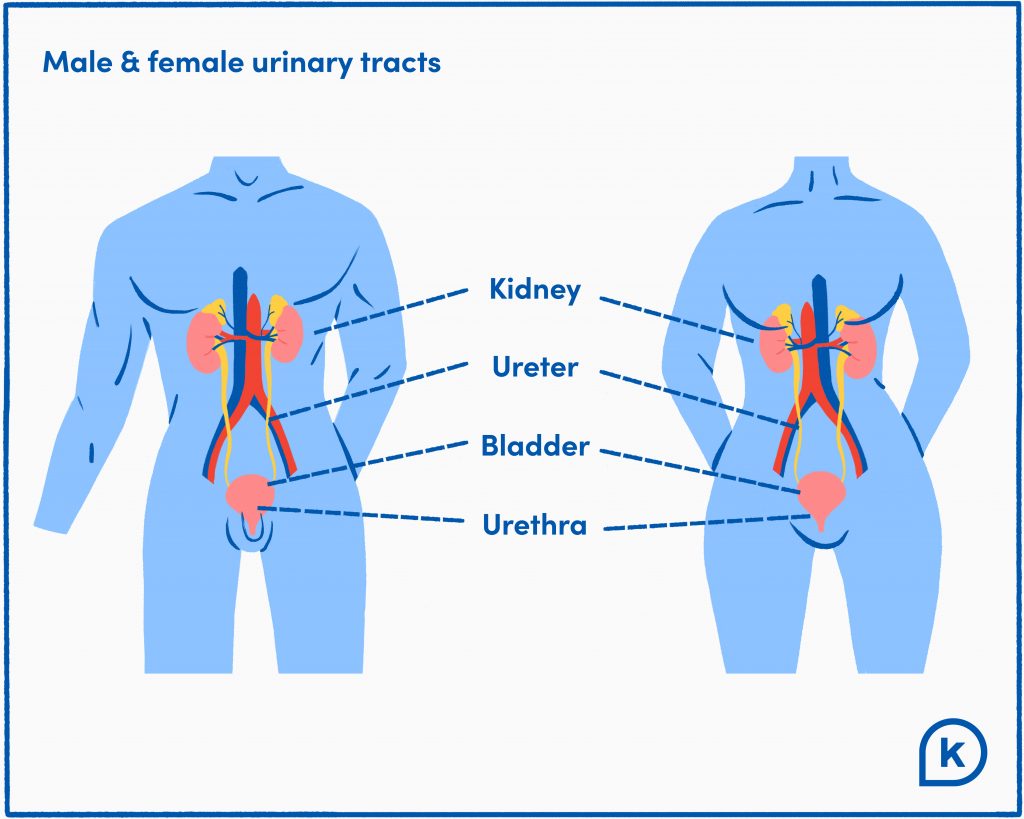
A urinary tract infection is an infection that occurs in any part of the urinary tract. Most UTIs occur in the lower urinary tract (the bladder and the urethra), though they can spread to the upper urinary tract (the kidneys). UTIs that target and stay in the lower urinary tract are referred to as simple UTIs.
No matter where a urinary tract infection occurs, UTIs can create severe discomfort or pain, especially when urinating.
Types of UTIs
The type of UTI you accept depends on where in your urinary system the bacteria have attached themselves and reproduced. The 3 types of UTIs are:
- Bladder infection (Also called cystitis)
- Kidney infection (Likewise called pyelonephritis)
- Urethra infection (Also called urethritis)
Missing from this list are the ureters. These are the tubes that carry urine from the kidneys to the bladder. While ureters are rarely infected, they tin can transfer infectious bacteria from one organ to the other within the urinary tract. If leaner spreads within our urinary organisation, it can lead to multiple UTIs and potential health complications.
For instance, an untreated bladder infection could lead to a more serious kidney infection. And an untreated kidney infection could atomic number 82 to long-term kidney damage or even to an infection outside of the urinary tract. This is why prompt UTI diagnosis and treatment are important–to preclude or cease the spread of bacteria.
As we'll hash out, each blazon of UTI has its own causes, symptoms and risks, though many may overlap. This makes it hard to differentiate between them, which is why your md may refer to your infection as a full general UTI instead of a more than specific type.
Either manner, information technology's best to seek medical attention at the first sign of any urinary discomfort. Your doctor will most likely care for you with UTI medicine, specifically antibiotics, which usually take effect within two-3 days.
What Causes a UTI?
In full general, UTIs are caused by bacteria that enter the body through the urethra and and then multiply in an surface area or areas of the urinary tract.
Escherichia coli (Eastward. coli) are overwhelmingly the most common cause of float and urethra infections. An estimated eighty-90% of UTIs are caused past this bacteria. UTIs tin besides be caused past:
- Fungi: Though rare, fungi can infect the urinary tract.
- Genetics: Abnormalities in the shape of your urinary tract or simply inheriting sure genes tin make y'all more probable to go UTIs.
- Other leaner: Other bacteria, such as staphylococcus infections, can cause infections through the urethra and sometimes even infect the kidneys from the bloodstream.
- Infected prostate: A prostate infection may cause a UTI in men considering an enlarged prostate makes it harder to fully empty the bladder.
What causes UTIs in women may differ from men thanks to women's physiology. First, a woman'south urethra is shorter than a human'southward. Second, the opening of a woman'due south urethra is shut to the vaginal opening and the anus.
Both of these factors make the path shorter and faster for leaner to travel from the vagina or anus (after sex or a bowel motion) to and and then through the urethra to the bladder. From the float, the infection tin spread through the ureters to the kidneys if it'south left untreated.
UTI Symptoms
Most UTI symptoms involve urination. Nevertheless, there are other symptoms that affect your mid-section. Additionally, although many of the symptoms of UTI in women as well occur in men and older adults, each of these groups also has some unique symptoms.
Depending on the type of UTI you have, its severity, your sexual activity, and your age, you may experience one, many, or none of the following symptoms:
- An intense, persistent and frequent urge to urinate
- A burning sensation or pain when urinating
- Passing frequent, small amounts of urine
- Cloud-colored urine
- Blood in the urine
- Strong or foul-smelling urine
- Pelvic pain (UTI symptom for women only)
- Hurting in the side, lower belly, or back
- Nausea and/or vomiting
- Fever
Additional UTI Symptoms in the Elderly:
- Pain in the lower abdomen or back
- Chills
- Constipation
- Urinary incontinence
- Sudden, new confusion or delirium
Lastly, each type of UTI may have more specific signs and symptoms. Here are the most common signs and symptoms according to the following UTIs:
Bladder infection (cystitis)
- Pelvic force per unit area
- Muscle aches and/or discomfort in the lower abdomen
- Frequent, painful urination
- Blood in urine
Kidney infection (pyelonephritis)
- Upper dorsum and side hurting
- High fever
- Chills and/or shaking
- Nausea
- Airsickness
- Symptoms of a bladder infection may also be present at the same time
Equally you tin see, since some of the symptoms may overlap, it can exist hard to make up one's mind which role of your urinary tract is infected. It can also be easy to mistake the symptoms for another type of ailment. That'due south why it's best to visit your doctor for a professional diagnosis at the offset sign of urinary discomfort.
How Is a UTI Diagnosed?
In order to diagnose and prescribe the all-time antibiotics to treat a UTI, doctors get-go past asking about your symptoms and any history of UTIs. Then, oftentimes, they will exercise a concrete exam to check for tenderness in your pelvis, back, and sides.
The side by side stride is to exam your urine with a urine sample and/or a urine culture. These urine tests help determine whether y'all have a UTI and what blazon of bacteria is causing the infection. This diagnosis will assistance figure out what type of treatment will exist near constructive. Later all, some leaner are resistant to certain types of antibiotics.
If you experience frequent UTIs, your doc may suggest doing an imaging study of your urinary tract. The following tests can help determine if there is an abnormality in your urinary tract:
- Ultrasound of the kidneys and bladder
- CT scan or MRI of the urinary tract
- Cystoscopy: This is when your dr. inserts a tube-like instrument with a lens into your urethra and bladder for an internal examination.
For a male UTI, if the doctor suspects you may have an enlarged prostate gland, they may also perform a rectal examination. While wearing gloves, the doctor inserts a lubricated finger into the anus to feel the prostate gland and check for any bumps or other abnormalities.
UTI Risk Factors
Anyone—male or female, young or one-time, sexually agile or non—tin become a UTI. At the same time, certain take chances factors that increase the likelihood of developing a UTI. These include:
- Sexual practice. Women are 30 times more probable to get a UTI compared to men. This is due to women'due south physiology. Their shorter urethra and the proximity of the opening of the urethra to the vaginal opening and the anus makes it easier for leaner to travel into the urinary tract.
- Age. Older adults are more susceptible to UTIs considering they are more than probable to have difficulties emptying their bladders. The risk is particularly higher for those 85 and older.
- Diabetes . Especially if uncontrolled, this condition can weaken the body'southward immune arrangement to fight off infection.
- Sexual activity. Whatsoever sex activity can crusade bacteria in the urinary tract, which tin can potentially pb to infection. Having sex more frequently or with multiple partners may too increase the risk of UTI.
- Spinal cord injuries: People with such an injury have an average of 2.five UTIs each year. A spinal cord injury or other nerve impairment can make information technology difficult to empty your float regularly and completely.
- Menopause: The prevalence of UTI in women 65 and older is about double that of all women. This is the age when menopause sets in. This may crusade changes in the leaner that alive inside a woman's vagina.
- Urinary catheters: When this tube is placed in the urethra and bladder to drain urine, it tin can introduce bacteria into the urinary tract.
- Bowel incontinence: People with bowel incontinence are iii times more than likely to develop a UTI.
- Urinary tract blockage: The presence of kidney stones, a tumor, an enlarged prostate, or any other condition tin can block the period of urine.
- Recent urinary tract procedures: Surgery or a urinary tract test that involves medical instruments can increment the risk of developing an infection.
- Certain forms of nativity command: Spermicides or unlubricated condoms may cause skin irritations that allow bacteria to invade.
- Antibiotics: Although antibiotics are frequently the outset-line treatment for UTIs, they can also bear upon the balance of the natural microflora in your urinary tract. Sometimes this can really lead to UTIs.
UTI and Pregnancy
About 8% of pregnant women volition experience a UTI while expecting. As the uterus expands, it puts force per unit area on the bladder. This tin get in more hard to empty your bladder and, in turn, increment the risk of bacteria growing in that location. Plus, the increase in progesterone that causes muscles to relax besides causes the urethra to aggrandize, making it much easier for bacteria to crawl within.
The symptoms of UTI in meaning women are the same as in any woman, however, some expecting mothers accept asymptomatic bacteriuria. A urinalysis finds bacteria in their urine, yet they don't experience any symptoms.
In either case, doctors typically treat the UTI or asymptomatic bacteriuria with an antibiotic because both post a college risk of UTI-related complications, like developing a kidney infection. Hormonal and anatomic changes make it easier for bacteria to spread from the bladder through the ureters to the kidneys. A kidney infection during pregnancy can lead to serious infections in the mother likewise equally early labor and low nativity weight in infants.
Chronic UTIs
Chronic or recurring UTI is when someone has iii or more than UTIs in a year or two or more UTIs in six months.
Simply equally with any UTI, chronic UTI is more mutual in women than in men. In a study of college women who had a kickoff UTI, about a quarter got another UTI within six months and almost 3% had a third UTI in that time. In another study, more than than half of women 55 and older reported some other UTI in the next yr.
Many of the same risk factors for UTIs in full general make people more than prone to chronic UTI. These risks are most common in the following people:
In premenopausal women:
- Frequent sexual activity or having multiple partners.
- Using spermicide.
In postmenopausal women:
- Changes in estrogen levels crusade changes in the microbiome of the vagina.
- Increased risk of incontinence and difficulty in completely elimination the bladder during urination.
In men:
- Enlarged prostate can make it harder to properly empty the float. And any collection of urine like that is an attractive place for bacteria to grow.
UTI Treatment Options
Although the main treatment for UTIs is antibiotics, some abode remedies may also help. Additionally, sometimes doctors will prescribe other medications along with the antibiotics. Below are the well-nigh mutual treatment options.
Antibiotics for UTI
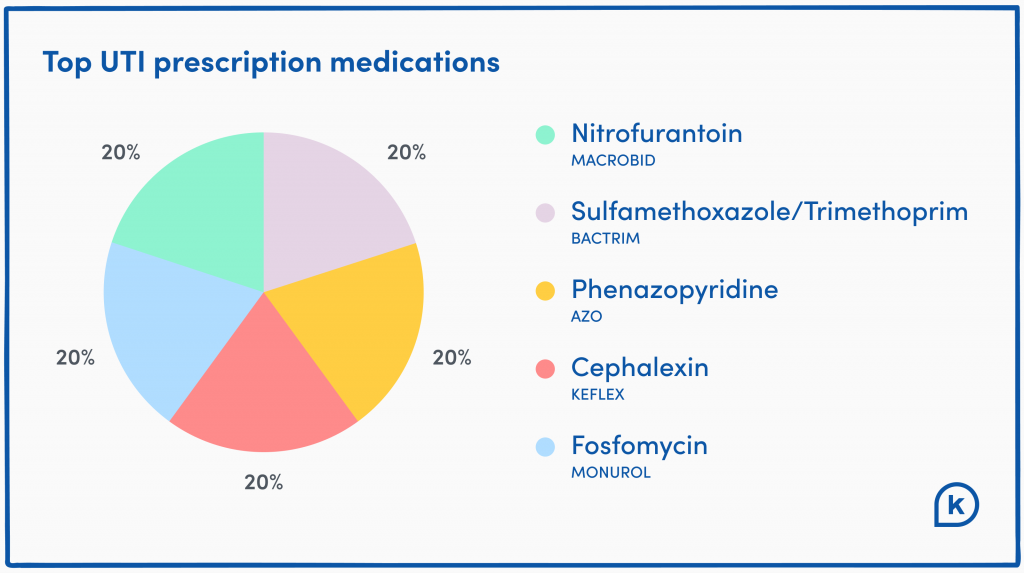
Antibiotics are usually the first—and most recommended—class of treatment for UTIs. Doctors utilize the results of a urine culture to identify which bacteria are causing the UTI. Then they can prescribe the best type and dosage of antibiotics to get rid of that bacteria and the infection.
The UTI antibiotics used vary based on if you lot have a unproblematic UTI, astringent UTI, or chronic UTIs.
Learn: Antibiotics for UTI: What're Your Options?
Handling for a simple UTI
Elementary UTIs are those that occur in the urethra and bladder in the lower urinary tract.
Oral antibiotics are usually enough to treat these.
It's important to take the entire course of antibiotics as prescribed, even if the symptoms subside subsequently a couple of days. Your doctor may as well prescribe hurting medication to ease whatsoever pain or burning when urinating until the antibiotics take effect.
For UTI in elderly populations, doctors typically utilize narrow-spectrum antibiotics (such as amoxicillin) because these accept a lower risk of antibiotic resistance and side effects.
Treatment for severe UTIs
For severe UTIs, like complications related to kidney infections, or UTIs associated with pregnancy, you may need to be treated in a hospital where you could receive intravenous antibiotics.
Treatment for chronic UTIs
If yous have chronic UTIs, your doctor may recommend other kinds of treatment, such as:
- Low doses of antibiotics given for an initial half-dozen months (and sometimes longer).
- One dose of antibiotics given afterwards sexual intercourse if your UTI is related to sexual activity.
- Vaginal estrogen therapy via a topical cream or suppositories for postmenopausal women.
Abode remedy treatments for UTIs
While doctors will almost always recommend antibiotic treatment for UTIs, there are likewise complementary home remedies for UTI pain and discomfort relief that can assistance until the antibiotics kick in. These may include:
- Drinking plenty of water (and/or cranberry juice) to dilute your urine, which volition assist you lot urinate more than, thereby helping to rid the urinary tract of the bacteria.
- Avoiding coffee, booze, and drinks that contain citrus juices or caffeine, which can all irritate your bladder and/or intensify the frequent/urgent demand to urinate
- Using a warm (not hot) heating pad on your belly to ease bladder force per unit area or discomfort
Related Weather condition
Most of the fourth dimension, specially when treated promptly and with the full course of an appropriate antibiotic, urinary tract infections can articulate up inside a few days. Withal, if a UTI is left untreated, if treatment is delayed, or if you do not take all of the antibiotics, serious complications can develop. Such UTI complications may include:
- Long-term or permanent kidney damage: An untreated UTI can spread to the kidneys where it tin develop into an astute or chronic kidney infection.
- Sepsis: Bacterial infections can sometimes lead to sepsis, where the entire body reacts by condign inflamed. This wide-spread inflammation can be life-threatening, especially if the infection spreads from the kidneys into the bloodstream.
To reduce the run a risk of whatever complications, it's in your best involvement to come across your doctor for treatment.
Preventing UTIs
Many factors can encourage bacteria to grow and spread inside your urinary tract. The skillful news is, simple habits can aid reduce the run a risk of future UTIs. Effort to follow as many of the following tips every bit you can:
- Potable enough of fluids, especially h2o. This will encourage yous to use the bathroom more often, thereby helping to flush extra bacteria from your urinary tract.
- Urinate regularly. Equally much as you can, don't concur in urine.
- Do not utilize douches or deodorant sprays in the genital expanse, as this may irritate the urethra.
- Wipe from front to back afterwards urination and bowel movement.
- If you lot're prone to recurring UTIs, try to empty your bladder shortly afterward sexual intercourse.
- If y'all are menopausal and take chronic UTIs, talk to your doctor about topical estrogen therapy.
When to See a Doc
Since most UTIs are easily treated, it's all-time to run across your doctor at the very first sign of symptoms. Getting an accurate diagnosis is important to rule out any other disease, such a sexually transmitted affliction, which can have similar symptoms.
Some patients may demand their urine to be cultured to determine the correct antibiotics.
In addition to wanting fast relief for your symptoms, immediate treatment volition assist prevent any medical complications that tin can arise when infection spreads, namely a kidney infection.
How Chiliad Health Can Assist
When you take a UTI, all y'all want is relief. Did you lot know you can go affordable primary intendance with the Thou Health app? Download K to bank check your symptoms, explore conditions and treatments, and if needed text with a dr. in minutes. Thou Health's AI-powered app is HIPAA compliant and based on 20 years of clinical data.
K Health articles are all written and reviewed by MDs, PhDs, NPs, or PharmDs and are for informational purposes only. This information does non institute and should not exist relied on for professional medical advice. E'er talk to your doctor nigh the risks and benefits of any treatment.
Source: https://khealth.com/learn/urinary-tract-infection/what-is/

Post a Comment for "Can a Uti Cause You to Pee Yourself"